
how museums work (and why muse inc feels like one)
7/15/20263 min read
walk into a museum anywhere in the world and you’ll feel it before you understand it. the quiet, the light, the way the space opens up in front of you and gently says, “take your time, there’s more.”
that feeling isn’t accidental. museums are designed like living, breathing frameworks for attention, emotion, and memory and that’s exactly how we build brands and campaigns at muse inc across dubai, the uae, and beyond.
a good museum doesn’t tell you where to look. it creates a space where looking becomes inevitable.
inside a museum: more than white walls
museums are choreographed experiences. architects and curators obsess over spatial layout and visitor flow: how you enter, where you pause, what you see in your peripheral vision, and how you find your way without feeling lost.
research shows that gallery layouts shape how people move, how long they stay with each piece, and even what they remember afterwards; in some cases, the spatial arrangement affects memory more than the content of the artworks themselves.
why space matters
from louvre in abu dhabi to etihad museum in dubai to the national museum in new delhi and csmvs (Chhatrapati Shivaji Maharaj vastu sangrahalaya) in mumbai, there’s a pattern: generous courtyards, tall galleries, and long corridors that open into light-filled atriums.
those large, airy spaces reduce cognitive overload, give you clear visual anchors, and create a sense of calm curiosity so you’re relaxed enough to actually take in the story instead of just fighting through the crowd or the noise.
good museum layouts in the uae and india alternate between dense, content-rich areas and open, breathing zones; that pacing keeps you from burning out and makes it easier to stay engaged over a long visit.
what great museums share
even though louvre abu dhabi, etihad museum in dubai, the national museum in new delhi, and the indian museum in kolkata all look completely different, they share a few core design moves.
there’s always a clear entry threshold where you reset, a logical (even if flexible) path through the space, visual cues that pull you forward, and intentional resting points where you’re invited to slow down and absorb.
behind the scenes, curators and designers in these museums think in terms of “intelligible” layouts spaces where what you see right now helps you build a mental map of the whole building, making the journey feel intuitive instead of confusing.
how we design campaigns like galleries
muse inc is a creative marketing agency based in the uae, working on branding, advertising, events, strategy and business automation for brands that want to move people, not just reach them.
when we say we build brands like museums, what we really mean is this: we treat every touchpoint of your website, socials, ads, events, influencer collaborations as exhibits inside one coherent, emotional journey.
the lobby: your brand’s first room
in a museum, the lobby is where you arrive, breathe, and decide if you’re staying. in brand terms, that’s your first impression: your visual identity, your home page, your hero video, the opening line of your campaign.
we design that “lobby moment” to feel spacious and intentional clean branding, clear messaging, and one strong emotional hook that says, “this is the world you’ve just stepped into.”
the galleries: campaign journeys and content flow
once you’re inside, museums guide you using subtle cues, lighting, sightlines, and wayfinding to create a narrative path without making you feel controlled.
we build marketing & advertising campaigns the same way: hero assets act like centerpiece paintings, supporting content fills in the story around them, and media planning becomes the visitor flow strategy that decides what people see first, second, and last.
research on museum layouts shows that when flow is intuitive, people stay longer, engage deeper, and remember more and that’s exactly the behavior you want from your audience scrolling through your stories, landing pages, or event experience.
the quiet corners: space to feel something
museums intentionally place benches, open atriums, and calmer rooms so you can sit, process, and let an artwork land emotionally.
we bring that same psychology into brand ecosystems: minimalist landing pages between high-energy campaigns, slower storytelling posts amid harder calls to action, intimate founder-led content next to big, bold hero moments.
it’s not just about constant stimulation; it’s about creating the conditions for a real connection.
muse inc as a museum
below is how we translate museum thinking into our three core pillars branding, marketing & advertising, and events & activations especially for brands moving in and out of the uae:
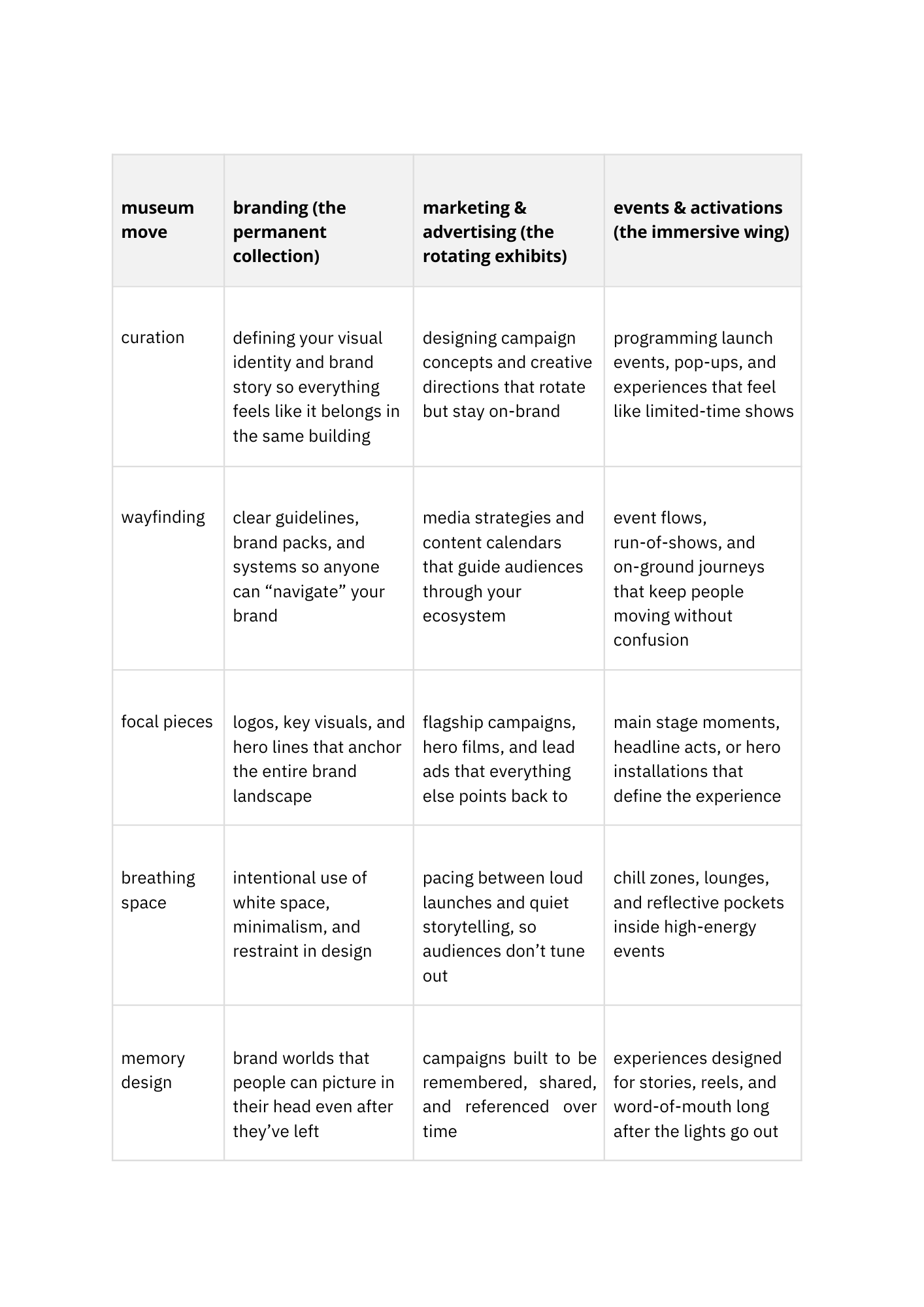
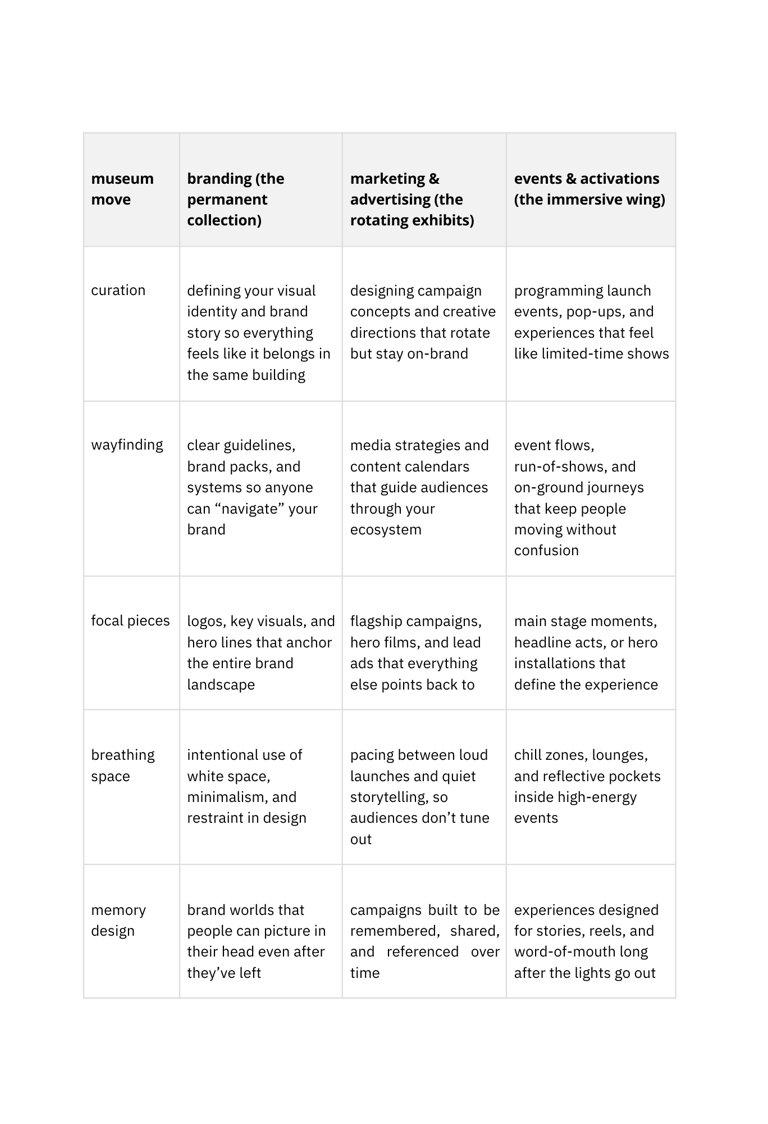
figure 1: the muse inc. execution matrix. how we map the five museum design movements across branding, marketing, and immersive events to build cohesive brand worlds.
museums don’t just house art; they architect how you meet it. we don’t just execute services; we architect how your audience meets your brand across india, the uae, and wherever your story travels next.
say hello at tan@museinc.ae or find us on instagram @museinc.ae.
museinc.ae
MENA's first guide for artists offering tools, guides, and resources to help artists build their careers through their art.
#F4AF: Free 4 Artists Forever
contact us directly:
UAE: +971 55 224 6347
Email: tan@museinc.ae
operating from:
Dubai, Sharjah, Abu Dhabi, United Arab Emirates (UAE)
Join the MuseInc.ae Roster
© 2026 MUSE INC. All rights reserved.